Caucasus Edition
A modern home for independent policy analysis.
A complete rebuild of the Journal of Conflict Transformation: a fast Next.js frontend, a custom backend synchronised with WordPress, custom archive search, and every existing URL and backlink preserved through launch.
- Product
- Online journal and publication
- Built for
- Editors, contributors and readers
- Platform
- Next.js + custom backend
- CMS
- WordPress, kept for editors
- Editors keep publishing in WordPress
- Existing URLs and backlinks preserved
- Custom search across the whole archive
The challenge
Caucasus Edition publishes analysis, op-eds, stories and full journal issues on the South Caucasus, with years of articles that other sites and researchers link to. The old site made that archive hard to browse, slow to load and difficult to evolve, but the editorial team relied on WordPress every day and the publication could not afford to lose its search rankings or break the links pointing to it.
The approach
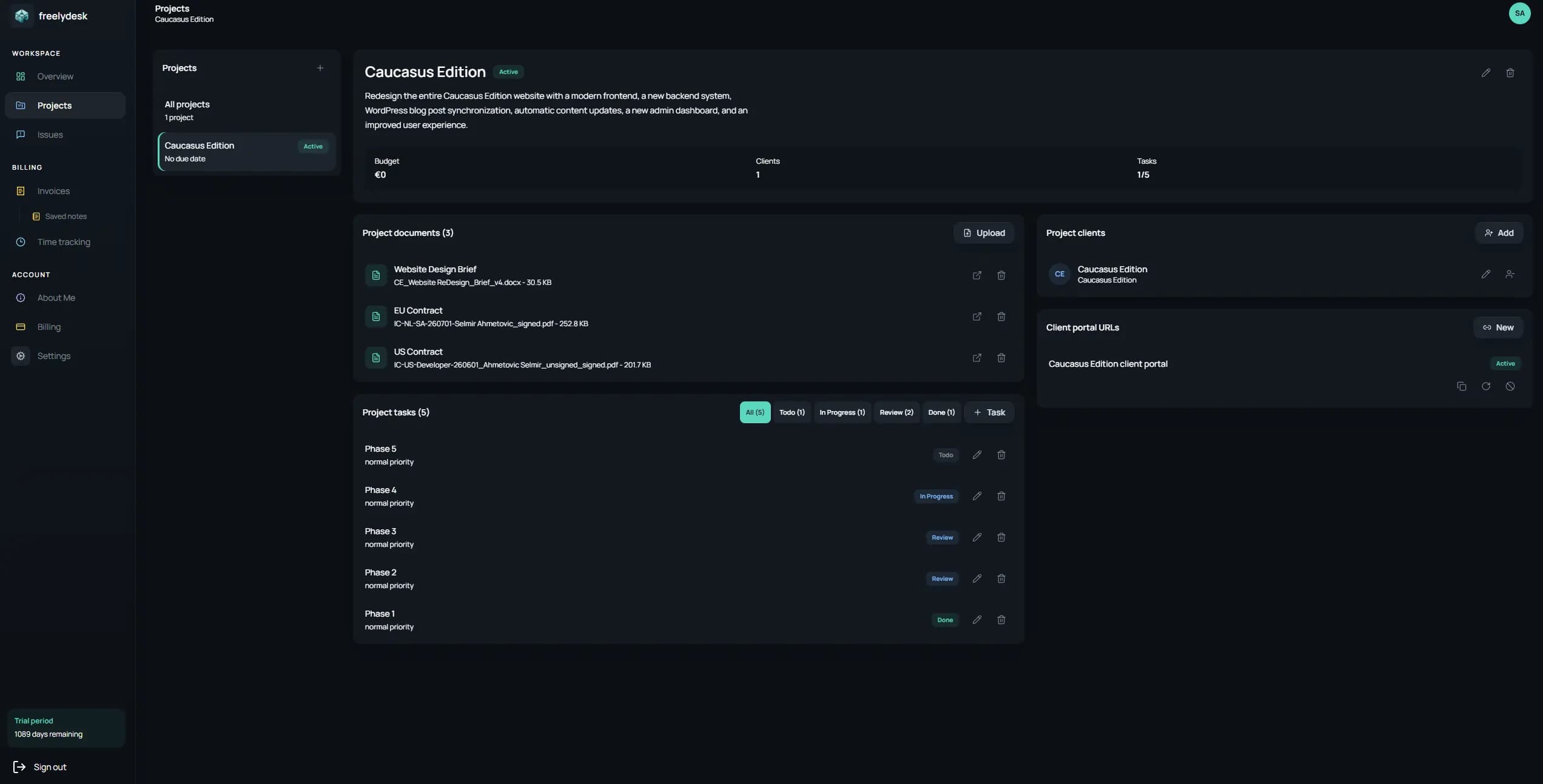
Instead of a risky all-at-once migration, the rebuild was split into five clear phases. The new design and frontend came first on mock data, so the team could review real pages early. A custom backend then became the core of the site, synchronising content from WordPress, powering search and handling forms securely. Finally the CMS data was aligned, every URL was mapped or redirected, and the site launched with monitoring and support in place.
The delivery
Phase 1
Design and frontend
With the full design brief in hand, the site's structure, reusable components and responsive pages were built in Next.js on mock data. The team could click through the real layout early and request changes before any content was connected.
Phase 2
Custom backend
A dedicated backend became the core of the site. It synchronises content from WordPress, runs the custom search, answers every frontend request, sends update sign-ups to Google Sheets and handles security in one place.
Phase 3
WordPress alignment
The existing WordPress content was reviewed and restructured, so categories, authors, issues and tags map cleanly onto the new backend without changing how editors work.
Phase 4
URLs, SEO and redirects
The existing URL structure was preserved wherever possible. Where an address had to change, a proper redirect was put in place, so backlinks and search rankings carried over to the new site.
Phase 5
Launch and support
Live deployment followed by monitoring, bug fixing and hands-on launch support while readers and editors settled into the new site.
An archive that is easy to read, browse and search.
Analysis, op-eds, stories, events and full journal issues each have a clear place. Readers can follow an author, browse an issue or search years of content, while editors keep writing in the dashboard they already know.
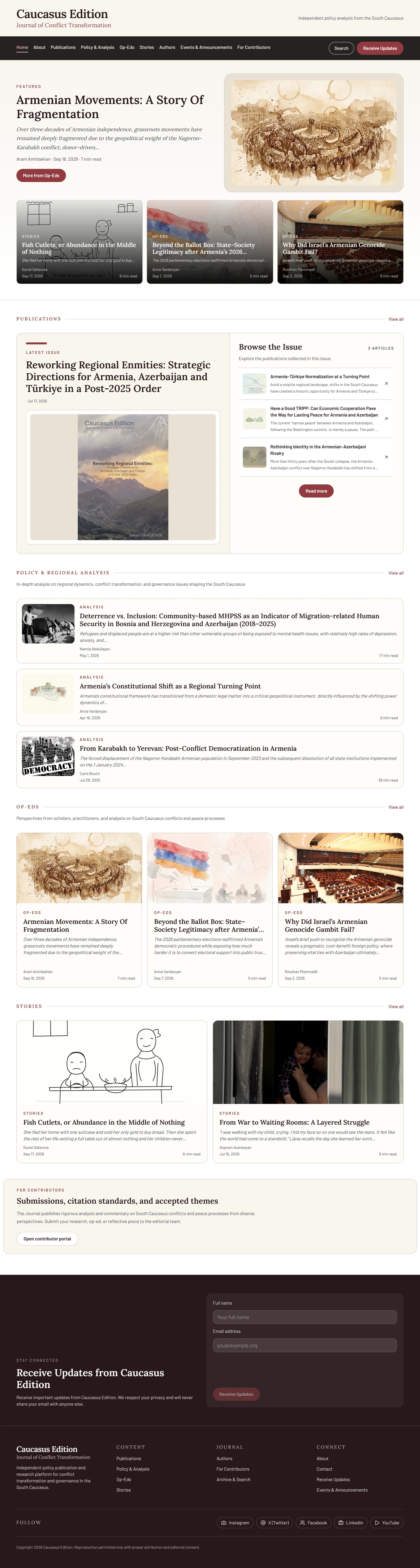
Key features.
WordPress stays the editor
Editors publish in the familiar WordPress dashboard. The backend picks up the changes and the new frontend presents them.
Custom archive search
Search by keyword, author, category, tags, date range and featured status, with results that update as the reader types.
Journal issues
Each issue collects its articles with a cover and summary, and previous issues remain one click away.
Updates sign-up to Google Sheets
Readers subscribe from any page and every sign-up lands in a shared spreadsheet the team already uses, validated on the server.
Preserved links
Old addresses either still work or redirect to their new home, so links from other publications and search engines keep working.
Fast, responsive reading
Pages load quickly and long-form articles read comfortably on phones, tablets and desktops.
The architecture and tech stack, explained.
How the pieces fit together, what each technology does in this product, and why it matters to the people using it.
Architecture
Frontend
- Next.js pages
- Article and issue layouts
- Archive search
Custom backend
- Content sync
- Search
- Forms
- Security
Content and integrations
- WordPress CMS
- Google Sheets
- URL redirects
Tech stack
Next.js
FrontendFast, search-friendly pages for articles, issues, authors and the archive.
In plain words: A widely used framework for fast, search-friendly web apps built on React.
Custom backend
BackendThe core of the site: WordPress synchronisation, search, form handling and security.
In plain words: A purpose-built server application that owns the data, the business rules and the security, instead of a generic plugin stack.
WordPress
CMSThe editorial dashboard where the team writes and publishes content.
In plain words: The familiar editing dashboard the editorial team already knew, now used only for writing and publishing content.
Google Sheets
IntegrationReceives every updates sign-up so the team can work with the list directly.
In plain words: A shared spreadsheet the team can open anytime, filled automatically by the website's forms.
The work.
- New design system and responsive Next.js frontend
- Custom backend with WordPress synchronisation and archive search
- WordPress content restructured for the new data model
- Server-side form handling with Google Sheets delivery
- URL preservation, redirect mapping and SEO migration
- Live deployment, monitoring and post-launch support
What changed.
- Readers get a faster, cleaner way to read and search years of analysis.
- Editors kept their WordPress workflow, so no retraining was needed at launch.
- Existing backlinks and search visibility carried over through redirects and preserved URLs.
- A phased delivery let the team review real pages early and avoid surprises at launch.
Have a system like this in mind?
Tell me what you want to build or fix. I reply within 24 hours with questions and a suggested next step.